A logical solution for the Ship of Theseus
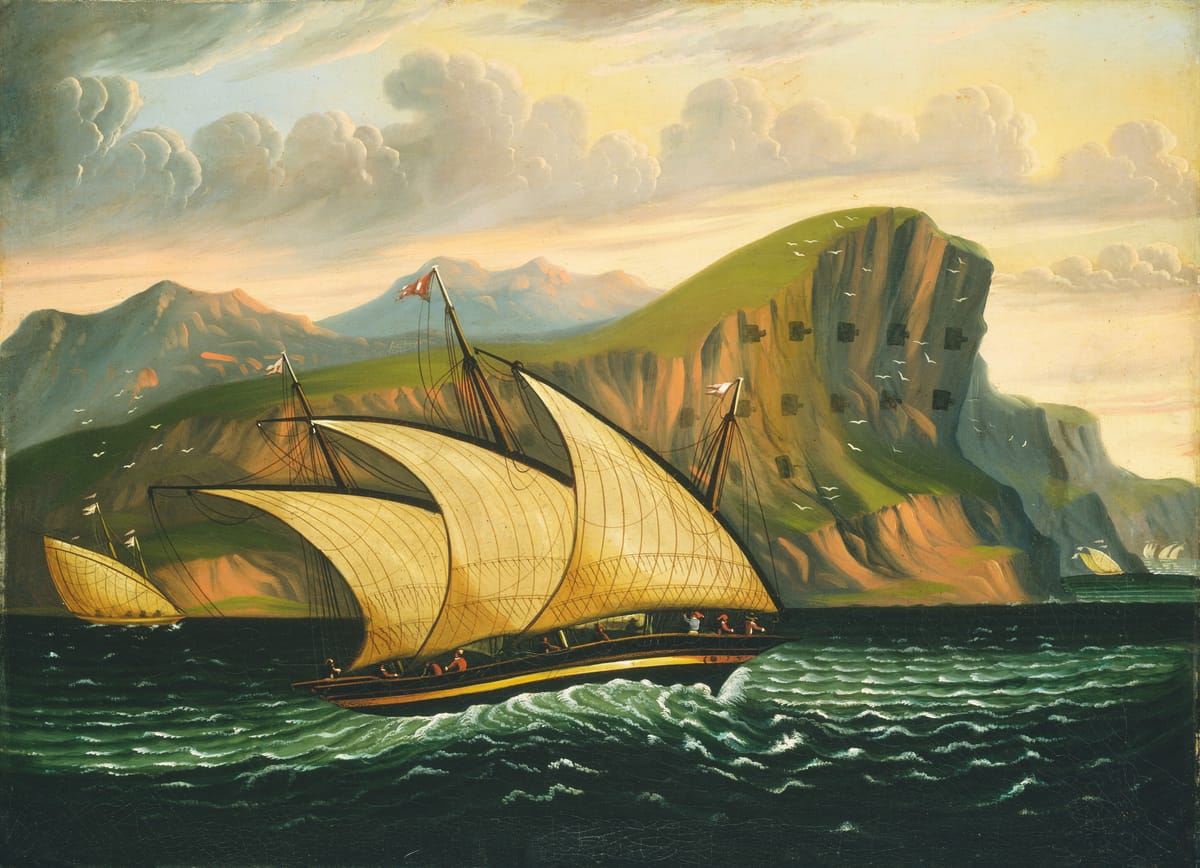
The thought experiment, first brought up by Plutarch and now commonly known as The Ship of Theseus asks whether a ship, of which each and every part has been replaced, is still the same ship. In this essay, I will try to postulate a logical solution for both the empirical and metaphysical aspects of the paradox.
A logical interpretation of the concept of change
We can, assuming that all properties of an object are equally important to its original state, assume that the process of change can be split into three movements: original object, partially changed object, object that underwent an ultimate change.
The original object is in this case the Ship of Theseus, that still had all of its properties:
Original 0bject:
P₀ = {P₁, P₂, P₃, …}
P(t) = P₀
This is before the ship undergoes the replacement of all its parts and all its properties. Here we can see that the ship, possessing all of its original properties, and no additional properties is the Original Object.
As the ship's parts are slowly replaced, step by step, the ship undergoes the Partial Change. Here, the ship possesses at least one of its original properties. As long as it has at least one, the ship is not ultimately changed and still possesses some of its original quality:
P(t) ∩ P₀ ≠ ∅
P(t) ≠ P₀
Finally, as all of the ship's parts have been replaced and none of the original properties remain, the ship has undergone an Ultimate Change, which means that it is no longer the original Ship of Theseus, but instead a New Original.
P(t) ∩ P₀ = ∅
Thus:
I(t) =
original if P(t) = P₀
changed if P(t) ∩ P₀ ≠ ∅ and P(t) ≠ P₀
ultimate change if P(t) ∩ P₀ = ∅
To now find out how much the ship is changed at each step, we can create a ratio.
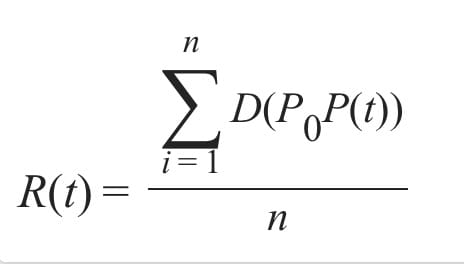
We can use the identity ratio to find out how much the object has changed, and how many of the original properties still remain. To properly do this, we of course have to factor in that properties can have dependencies. If a property, on which another is dependent, is removed, the dependent property is also removed.
Therefore, we can use a dependency function:
D(P0, P(t)) = 1 if P0 ∈ P(t) and all dependencies are present
0 if otherwise
Differentiation of metaphysical and empirical change
Metaphysical change and empirical change are different in this case insofar as, at any given moment (t), the ship can be both Ultimately changed, and Original at the same time. If all of the empirical properties of the ship change or are removed, then the ship is ultimately changed empirically; and if meanwhile, all of the ship's metaphysical qualities, such as the designation of its captain and its crew, and the country it belongs to, have not changed, then the ship is still in its original metaphysical state.
One can both calculate an average of the identity ratios of empirical and metaphysical change, or one can look at them separately to get a clearer image of certain change, but this is all to say that an object can be both changed and unchanged at the same time.
Therefore, the option exists, that if we knew the metaphysical properties of the Ship of Theseus, that it is perhaps ultimately changed, perhaps partially changed, and perhaps even (a priori) original.